16 design ideas for fabric application
Jan 07, 2023
The design idea about the combination of fabrics is a complete system with rules to follow. Here we analyze and summarize the following 16 types, together with examples of product pictures, and share them with you, so that you can use the design flexibly.
1. Homogeneous and same color splicing
2. Heterogeneous same-color splicing (glossy contrast)
3. Heterogeneous stitching of the same color (thickness contrast)
4. Different color homogeneous splicing (color contrast)
5. Superposition of the same color and heterogeneity (level contrast)
6. Contrasting splicing of solid colors and patterns
1. Homogeneous and same-color splicing:
Multi-purpose splicing and bone-like style design are the most basic techniques.
2. Heterogeneous same-color splicing (glossy contrast):
The visual effect is relatively subtle, and the degree of subtlety depends on the gloss contrast and the size of the stitching area.
(High requirements for materials and high technical requirements for workmanship)
3. Heterogeneous and same-color splicing (thickness contrast):
When the style looks dull, try changing the thickness of some fabrics, so that the design looks more "live" without changing the structure and lines of the style.
(Common material requirements, high technical requirements for workmanship)
4. Different color homogeneous splicing (color contrast):
This method of use is not recommended for too large a splicing area, and is more suitable for image models.
(High requirements for color fastness of materials and high requirements for workmanship)
5. Same-color heterogeneous superposition (level contrast):
It's a very effective way to use it, but the process risk at the seams is relatively high.
(High requirements for material firmness, high requirements for workmanship)
6. Contrasting splicing of solid colors and patterns:
It is recommended to use solid color fabrics of the same color system to stitch the pattern, and the material properties of the two fabrics should be as close as possible. (thickness, drape, etc.)
(Slightly higher requirements for materials and slightly higher requirements for workmanship)
How to use bright spots in fabric design
The following 10 application examples are summarized for reference in thinking:
1. XX style with modern elements
2. XX style plus future elements
3. Woven material plus wool elements
4. Sportswear with feminine elements
5. Tooling with feminine elements
6. Add femininity to streetwear
7. Outdoor decoration with ethnic elements
8. Add sports elements to formal clothes
9. Casual with a touch of luxury
10. Attribute Contrast Contrast Elements
1. XX style with modern elements
This rule needs to be mastered by someone who has a certain design foundation or matching foundation.
But it’s not difficult to say, you just need to master the essence, clarify the style attributes of a single product, do some deliberate practice at ordinary times, and improve your perceptual aesthetics at the same time. The principle is that the attributes of the two styles must be opposite, so that the combined effect will be more dramatic and brilliant.
For example, modern punk style materials + feminine silhouette styles.
2. XX style plus future elements
For example, the girly style, combined with the fabric material of future elements, forms a strong contrast.
3. Woven material plus wool elements
This matching and contrasting rule is very suitable for young brands. Relatively suitable for autumn and winter seasons. The coarseness of the wool weave contrasts with the finely woven surface
4. Sportswear with feminine elements
For example, sporty style fabrics combined with organza with feminine elements break the traditional idea of fabric combination:
5. Tooling with feminine elements
Such as the combination of leather, twill and tulle.
Because the style attributes of tooling style and romantic style are very different, putting the two together will produce dramatic conflicts, and the design will not be so boring.
6. Add femininity to streetwear
The combination of rural style, ethnic style and street style, one hard and one soft, creates design conflicts
7. Outdoor decoration with ethnic elements
Fabric materials with different attributes are used in the collocation, so the effect is strong in contrast, rich in layers, and has a certain visual impact. Although it is more difficult to control, we only need to pay attention to the fact that when the fabric contrast is large, the color should be as uniform as possible, and there will be no mistakes.
8. Add sports elements to formal clothes
Glossy fabrics will add drama while making visual impact stand out. In addition to satin fabrics, there are also materials with very strong luster such as leather and PVC.
9. Casual with a touch of luxury
This law is very practical and is the point of wider coverage. When you feel that the fabric combination is "dull", try to find a shiny material to match it, and the effect must be beyond your expectations.
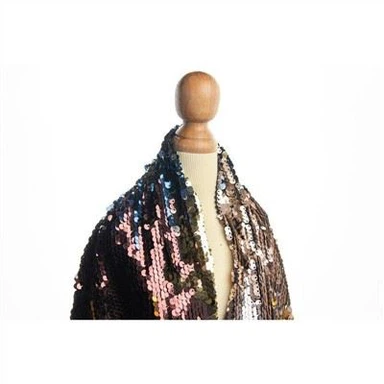
For example, cotton shirting cloth, combined with gorgeous sequined fabrics, combines two fabrics with different personalities to form a contrasting visual effect
10. Attribute contrast comparison
Soft vs. stiff, rough vs. smooth, matte vs. shiny.
The ultimate contrast in which the fabric material properties are almost completely opposite. It should be noted that in such a combination of two materials and fabrics, try not to have any contrast in color or pattern.
Summarize:
In short, design thinking is interlinked.
Don't be afraid to innovate based on rules. The more timid you are, the more conventional you are.