Guipure lace fabric
Aug 22, 2022
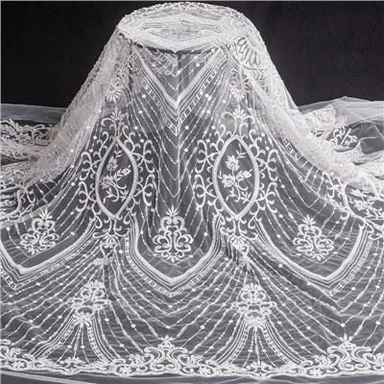
Chemical lace (also known as guipure lace) was an invention of the Swiss lace industry in the mid-19th century and became very "fashionable" starting around 1880. These laces are embroidered on the ground and then etched away in an acid bath. For example, cotton thread can be embroidered on silk cloth, which is then dissolved in bleach, leaving the cotton thread unaffected. The resulting lace can range from as thin as a spider web to rather heavy curtains and more. This chemical lace (guipure lace) quickly became very popular because it was both beautiful and affordable, offering a range of patterns and designs unimaginable today.
Chemical lace is still produced today (mostly viscose rayon), but gone are the delicacy of the thread and the designs of yesteryear - it's too expensive to produce them today.
Guipure laces can be cut without unraveling, and can be dyed easily because they shrink only slightly. I use espresso to dye white lace in a hot (non-boiling) water bath and add some table salt. Wet the lace and immerse it in a coffee bath (sink, bucket) for about 10 minutes or more (check color depth frequently). Then rinse the lace, add a little fabric softener to the final rinse, roll the lace in a dry towel, pull the lace into shape, and let it almost dry. Press with a hot iron. You'll get beautiful draped ecru lace.